Hockey Positions Explained: Roles and Responsibilities on the Ice
Learn every hockey position and its responsibilities. Understand centers, wingers, defensemen, goalies, and how each position changes throughout the game.
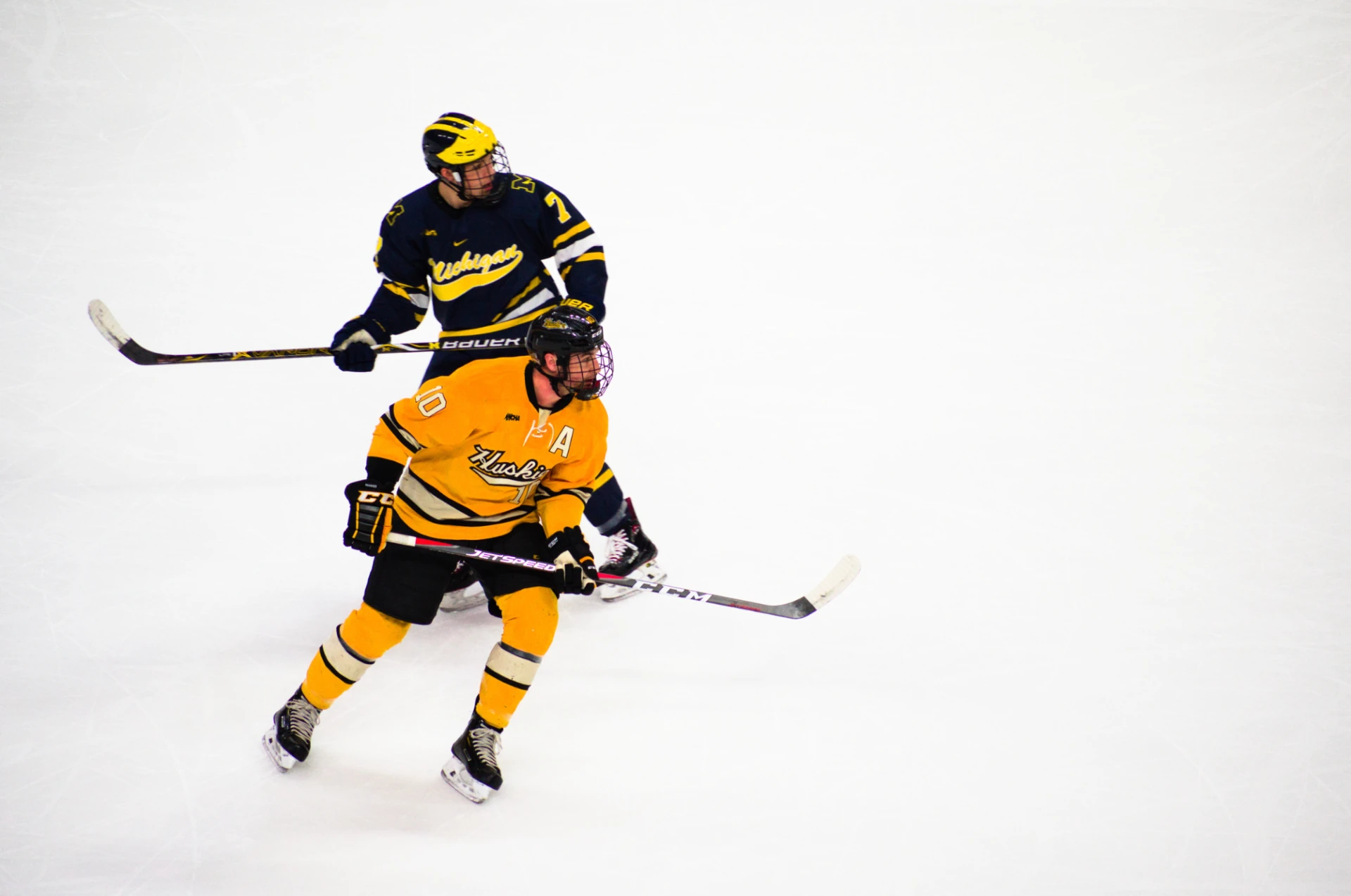
Learning the positions in hockey sounds simple.
There are three forwards, two defensemen, and one goalie.
But understanding hockey positions is about much more than knowing where players line up on the ice.
Good hockey players understand their responsibilities. They know how their role changes depending on where the puck is, which team has possession, where pressure is coming from, and what their teammates are doing.
A winger isn't always standing on the wing. A center isn't always in the middle of the ice. A defenseman doesn't automatically stay at the blue line every time the puck enters the offensive zone.
Hockey is too fluid for that.
Instead of thinking about positions as fixed locations, it is better to think about them as a combination of roles, responsibilities, reads, and relationships with the other players on the ice.
In this guide, we'll break down all of the major hockey positions, what each player is responsible for, and how those responsibilities change throughout a game.
What Are the Positions in Hockey?
A standard hockey lineup has six players on the ice for each team when both teams are at full strength:
- Center (C)
- Left Wing (LW)
- Right Wing (RW)
- Left Defense (LD)
- Right Defense (RD)
- Goalie (G)
The center, left wing, and right wing make up the three forwards.
The left and right defensemen form the defensive pair.
The goalie protects the net.
Those labels provide structure, but they don't tell the entire story.
Once the puck is dropped, players constantly move, rotate, support one another, and react to changing situations. Understanding those responsibilities is where hockey IQ becomes important.
Why Hockey Positions Aren't Fixed Spots on the Ice
One of the biggest misconceptions young players can develop is thinking their position tells them exactly where they should stand.
It doesn't.
Your position gives you a starting framework for understanding your responsibilities, but the game determines where you need to go next.
Consider a left winger.
During a defensive-zone breakout, that player might be positioned near the wall as an outlet. Seconds later, they could be carrying the puck through the middle of the neutral zone. After entering the offensive zone, they might drive toward the far post. If possession changes, they may need to immediately get above the puck and defend.
Same player. Same position. Completely different locations.
That's why players should learn more than:
"Where am I supposed to stand?"
They should learn to ask:
"What is my responsibility in this situation?"
That question leads to a much better understanding of the game.
Center Position in Hockey
The center is one of the most involved positions on the ice.
Centers frequently play through the middle of the rink and are involved in both offensive and defensive situations. Because of this, centers need strong awareness and an ability to read what is happening around them.
A center's exact responsibilities will depend on the team's system, but common responsibilities include:
- Taking faceoffs
- Supporting the puck through the middle of the ice
- Providing an outlet during breakouts
- Supporting defensemen in the defensive zone
- Driving through the middle during transition
- Creating passing options in the offensive zone
- Recognizing when to attack and when to stay above the puck
- Communicating with teammates throughout the play
One of the most important concepts for centers is support.
Centers are often asked to provide an option underneath the puck so teammates have somewhere to go when they're pressured.
That doesn't mean blindly skating toward the puck.
Good support means finding a useful position where you can become an option without bringing another defender directly into the play.
The Center's Role in the Defensive Zone
Centers often have significant defensive responsibilities.
Depending on the team's defensive-zone coverage, the center may be responsible for protecting dangerous areas, supporting defensemen around the net and below the goal line, tracking offensive players through the slot, or helping pressure the puck.
The key is understanding that defensive responsibilities change as the puck moves.
If the puck moves from one corner to the other, all five players need to adjust.
The center needs to read:
- Where is the puck?
- Where is the most dangerous offensive threat?
- Which teammate is applying pressure?
- Where does support need to come from?
- Has coverage changed because players rotated?
This is why playing center requires more than skating through the middle of the ice. The position demands awareness of the entire situation.
The Center's Role on a Breakout
During many hockey breakout systems, the center plays an important support role.
Instead of immediately flying out of the defensive zone, the center may need to come low and underneath the puck to provide a short passing option.
Why?
Because the defenseman retrieving the puck is often under pressure.
If the winger is covered and the defenseman has no direct option up the wall, support through the middle can give the puck carrier another way to escape pressure.
The exact route depends on the breakout and the pressure being applied, but the principle remains the same:
Support the puck and make yourself available.
Left Wing and Right Wing Positions in Hockey
The left wing and right wing are the two outside forward positions.
Wingers are often associated with offense, but their responsibilities extend across all three zones.
Common winger responsibilities include:
- Creating width through the neutral zone
- Supporting breakouts along the wall or through available space
- Forechecking
- Driving the net
- Finding open ice in the offensive zone
- Supporting puck possession
- Covering defensive responsibilities near the points or higher areas of the defensive zone, depending on the team's system
- Getting above the puck when possession changes
One mistake young wingers sometimes make is believing they need to stay glued to the boards.
The wall can be an important reference point during certain breakouts and defensive situations, but good wingers recognize when to move into space, support the middle, drive the net, or rotate with a teammate.
The Winger's Role on a Breakout
Wingers play a major role in helping their team exit the defensive zone.
Depending on the breakout being used, a winger may provide an option along the wall, move into available space, support underneath pressure, or stretch the zone.
But simply getting to a spot isn't enough.
The winger needs to read pressure.
Before receiving the puck, they should be scanning to identify:
- Is a defenseman pinching?
- Is pressure coming from behind?
- Where is the center?
- Is there room to skate?
- Can the puck be moved quickly into the middle?
- Is the safest option to chip the puck into available space?
This is a perfect example of why understanding how to improve hockey IQ matters.
The player who gathers information before the puck arrives has a much better chance of making the next play quickly.
The Winger's Role in the Offensive Zone
Once the puck enters the offensive zone, wingers need to become more than players who wait for passes.
They can create offense by attacking open space, supporting the puck, getting to the net, recovering loose pucks, creating passing lanes, and pulling defenders away from dangerous areas.
Offensive hockey is constantly changing.
If one forward drives below the goal line, another player may need to fill higher ice. If the puck moves to the point, forwards may need to establish traffic and position themselves for tips, rebounds, or passing options.
The important concept is maintaining offensive structure without becoming stationary.
Good offensive players move with a purpose.
Defenseman Position in Hockey
Defensemen have a simple-sounding job: defend.
In reality, the position requires much more.
Modern defensemen are involved in defending, breaking the puck out, supporting transition, maintaining offensive possession, controlling gaps, and helping their team move efficiently between offense and defense.
Common responsibilities for defensemen include:
- Defending the rush
- Protecting dangerous areas
- Retrieving pucks
- Starting breakouts
- Reading forechecking pressure
- Supporting their defensive partner
- Controlling gaps
- Keeping plays alive in the offensive zone when the read allows it
- Supporting offensive possession
- Communicating with teammates
Defensemen need to constantly balance pressure with protection.
Step too aggressively without support and you can give up space behind you.
Back off too quickly and you may give an attacking player unnecessary time and space.
The best decision depends on the situation.
Understanding Gap Control for Defensemen
One of the most important concepts for defensemen is gap control.
Your gap is the space between you and the attacking player.
The goal isn't simply to get as close as possible.
A defenseman needs to control enough space to challenge the attacker while still being able to defend speed, protect dangerous ice, and react to the play.
Good gap control is influenced by several factors:
- The attacker's speed
- Your own skating position and momentum
- Where the puck is located
- Whether you have defensive support
- Where the dangerous ice is
- The attacker's available options
Gap control is another example of a hockey concept that can't be reduced to one rule.
Defensemen need to read the situation and adjust.
Should Defensemen Always Stay at the Blue Line?
No.
The blue line is an important reference point for defensemen in the offensive zone, but good defensemen don't treat it like an invisible wall they can never cross.
There are situations where a defenseman can step down the wall, activate into open space, or support an offensive play deeper in the zone.
The decision depends on the read.
A defenseman should consider:
- Do we have possession?
- Is there pressure on the puck?
- Do I have support behind or above me?
- Can I arrive first?
- What happens if the puck gets past me?
The goal isn't to tell defensemen to always hold the blue line or always activate.
The goal is to teach them to recognize when each decision makes sense.
Goalie Position in Hockey
The goalie is the final line of defense and the only player whose primary position is directly in front of the net.
Stopping the puck is obviously the main responsibility, but good goaltending involves much more than reacting to shots.
Goalies must read plays as they develop, track the puck through traffic, manage depth and angles, anticipate passes, control rebounds, communicate with teammates, and handle the puck when appropriate.
Common goalie responsibilities include:
- Protecting the net
- Tracking the puck
- Managing angles and depth
- Reading developing threats
- Controlling rebounds
- Communicating with defensemen
- Helping on puck retrievals when appropriate
- Recognizing screens, tips, and backdoor threats
Goalies see the ice from a unique perspective and can often identify pressure that teammates can't see.
Communication can therefore be an important part of helping the entire defensive unit.
What Do F1, F2, and F3 Mean in Hockey?
One important distinction is that F1, F2, and F3 are not permanent hockey positions.
They describe forward roles within a situation.
For example, on a forecheck:
- F1 is generally the first forward applying pressure.
- F2 reads the pressure created by F1 and supports the next layer of the forecheck.
- F3 generally provides the higher layer of support and helps protect against the opponent escaping pressure.
The important part is that your center isn't automatically F1, and your left winger isn't automatically F2.
The situation determines the role.
A right winger could be F1 on one forecheck and F3 on the next shift.
This is an important step in understanding hockey at a deeper level because players begin thinking beyond their position label and start recognizing their responsibility within the current situation.
Coaches and players can explore different forechecking systems and player responsibilities in the Overload Hockey Systems Library.
Hockey Positions Change When Possession Changes
One of the most important moments in hockey happens when possession changes.
Your team might be attacking one second and defending the next.
Players need to recognize that transition immediately.
When your team gains possession, players should begin thinking about:
- Where is the available space?
- How can I support the puck?
- Can we attack quickly?
- Where is the next passing option?
When your team loses possession, the questions change:
- Can we pressure the puck immediately?
- Do I need to get above the puck?
- Where is the dangerous space?
- Who needs support?
- What threat do I need to identify?
Players who recognize these transitions quickly often look faster even when they aren't the fastest skaters.
They are processing the game sooner.
Hockey Positions on a Forecheck
A forecheck is a great example of how traditional hockey positions turn into situational responsibilities.
Different teams use different forechecking systems, but the basic objective is to apply organized pressure and make the opponent's breakout more difficult.
Instead of five players independently chasing the puck, a good forecheck works in layers.
One player pressures. Other players support that pressure. Players away from the puck anticipate where the next play is likely to go.
That relationship matters more than simply knowing whether you're listed as a center or winger on the lineup card.
The best forechecking teams move together.
Hockey Positions During a Breakout
Breakouts are another situation where every position has a connected responsibility.
Defensemen typically need to retrieve the puck, read pressure, communicate, and identify the best available option.
Forwards need to provide useful support.
If every forward immediately leaves the defensive zone looking for offense, the defenseman may be left with no safe passing option.
If every forward comes too close to the puck, the team may have difficulty creating space and advancing through the neutral zone.
A successful breakout requires balance.
Players need to understand where pressure is coming from, where support is available, and how to create multiple options.
Explore the Overload Hockey Systems Library to learn more about breakout structures, responsibilities, and reads.
Hockey Positions in the Defensive Zone
Defensive-zone play is often taught by assigning players areas or responsibilities.
That structure is important, but players also need to understand what the structure is trying to accomplish.
Generally, a defensive team is trying to:
- Protect dangerous areas
- Pressure the puck when appropriate
- Support the player applying pressure
- Identify offensive threats
- Prevent easy access to the middle of the ice
- Recover possession and transition out of the zone
Exactly how those responsibilities are divided depends on the team's defensive-zone system.
This is why players shouldn't assume every coach uses identical terminology or coverage.
Learn your team's structure, but more importantly, understand what that structure is trying to accomplish.
Strong Side vs. Weak Side in Hockey
Understanding strong-side and weak-side positioning can help players better understand their responsibilities.
The strong side generally refers to the side of the ice where the puck is located.
The weak side is the opposite side.
These references change every time the puck moves.
Why does that matter?
Because the puck's location changes where pressure, support, and dangerous space are located.
A weak-side winger, for example, may have a completely different responsibility than the strong-side winger in the same situation.
Learning these relationships helps players understand why their positioning changes as the puck moves around the ice.
How to Learn Your Hockey Position Better
If you want to become better at your position, don't only study what to do when you have the puck.
Watch players who play your position and focus on what they do away from it.
Ask yourself:
- Where do they move before receiving the puck?
- How do they support teammates?
- What do they do immediately after a turnover?
- How do they create space?
- When do they attack?
- When do they stay above the puck?
- How do they react to pressure?
- Where do they go when a teammate changes position?
You can also improve your understanding by studying hockey systems, learning common terminology, reviewing game film, and working through decision-making situations.
The goal is to understand the game well enough that you aren't constantly waiting for someone to tell you where to go.
Hockey Positioning Is About Relationships
One of the best ways to understand hockey positioning is to stop thinking about individual players in isolation.
Your positioning affects your teammates.
If you move, someone else may need to fill your space.
If you pressure the puck, someone needs to support you.
If a defenseman activates into the offensive zone, another player may need to recognize the open space behind them.
If F1 forces the puck carrier in one direction, F2 and F3 should read that pressure and adjust.
Five-player hockey works when players recognize these relationships.
Instead of asking only, "Where should I be?" start asking:
"Where should I be based on where everyone else is?"
That's a much more useful hockey question.
Frequently Asked Questions About Hockey Positions
What are the 6 positions in hockey?
The six positions on the ice at full strength are center, left wing, right wing, left defense, right defense, and goalie. The center and two wingers make up the forwards, while the two defensemen form the defensive pair.
What is the hardest position in hockey?
Every hockey position presents different challenges, so there isn't one position that is universally the hardest. Centers often have significant responsibilities across all three zones, defensemen must manage pressure and space while defending dangerous areas, goalies have a highly specialized role, and wingers must contribute both offensively and defensively. The difficulty also changes based on the player's strengths, the team's system, and the level of competition.
What does a center do in hockey?
A center commonly takes faceoffs, supports the puck through the middle of the ice, helps on breakouts, contributes defensively, supports teammates in transition, and creates offensive options. Exact responsibilities depend on the team's system.
What does a winger do in hockey?
Wingers contribute on breakouts, forechecks, offensive attacks, puck support, and defensive coverage. Although they often operate from the outside areas of the ice, good wingers move throughout the zone based on the puck, pressure, available space, and their teammates' positioning.
What does a defenseman do in hockey?
Defensemen defend rushes, protect dangerous areas, retrieve pucks, start breakouts, manage gaps, support their partner, and contribute to offensive possession. Modern defensemen need to be able to read when to pressure, when to protect space, and when to join the offense.
What do F1, F2, and F3 mean in hockey?
F1, F2, and F3 describe situational forward roles rather than permanent positions. F1 is generally the first forward applying pressure, F2 supports the next layer of the play, and F3 provides additional support while helping protect against the opponent escaping pressure. The exact responsibilities can vary depending on the system being used.
Can hockey players switch positions during a game?
Players frequently move into different areas of the ice during normal play, even though their listed position doesn't necessarily change. Hockey is fluid, so players must rotate, support teammates, cover open space, and adjust when the situation changes.
Learn the Responsibility, Not Just the Position
Knowing the names of the hockey positions is easy.
Understanding how those positions work together is where the game becomes more interesting.
Centers, wingers, defensemen, and goalies aren't operating independently. Every movement creates a reaction somewhere else on the ice.
That's why good positioning isn't about memorizing a spot.
It's about reading the puck, pressure, space, possession, and your teammates.
When players understand those relationships, they can begin making decisions instead of simply following instructions.
That's what we're trying to develop at Overload Hockey.
If you want to take the next step, explore the Overload Hockey Systems Library to see how different positions work together during breakouts, forechecks, defensive-zone coverage, offensive-zone play, and other common hockey situations.
You can also read our guide on how to improve your hockey IQ to learn how scanning, anticipation, positioning, puck support, and decision-making can help you see the game better.
Your position tells you your role. Hockey IQ helps you understand what that role requires right now.