
How to Improve Your Hockey IQ: 10 Ways to See the Game Better
Learn how to improve hockey IQ with 10 practical ways to read the ice, anticipate plays, make faster decisions, and become a smarter hockey player.
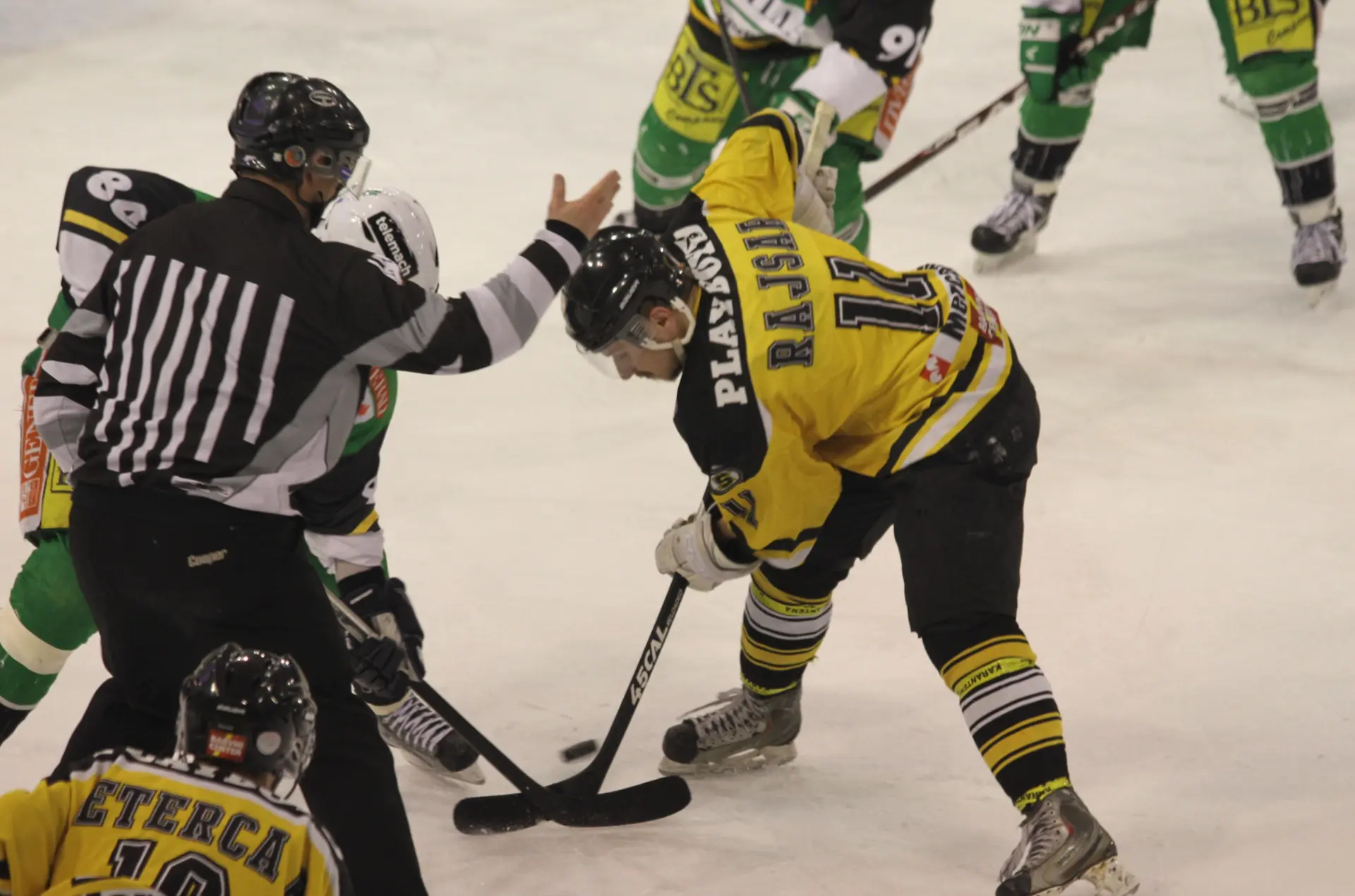
Skating faster, shooting harder, and improving your hands can make you a better hockey player. But as the game gets faster and the competition gets better, skill alone only takes you so far.
You also have to understand what is happening around you.
That is where hockey IQ comes in.
Players with strong hockey IQ seem to have more time with the puck. They find open ice before it appears. They anticipate pressure, support teammates, recognize patterns, and make decisions before other players have fully processed what is happening.
Some players develop these habits naturally through experience, but hockey IQ is not something you either have or you don't. It can be developed.
If you're wondering how to improve hockey IQ, the answer isn't simply playing more games. You need to learn how to watch, read, anticipate, and understand the game.
Here are 10 ways to start doing exactly that.
What Is Hockey IQ?
Hockey IQ is a player's ability to recognize what is happening on the ice, anticipate what is likely to happen next, and make effective decisions based on that information.
It includes much more than knowing where to stand.
A player's hockey IQ affects how they read pressure, find space, support the puck, anticipate turnovers, recognize defensive coverage, understand systems, and decide what to do before the puck reaches them.
Think of skill as your toolbox. Hockey IQ helps you decide which tool to use and when to use it.
The best players combine both.
1. Scan the Ice Before You Get the Puck
One of the most important habits for improving hockey IQ happens before you ever touch the puck.
Scan.
Look over your shoulders. Check where pressure is coming from. Find your teammates. Identify open ice. Notice where defenders are positioned.
Then do it again.
A common mistake is waiting until the puck arrives before looking for the next play. At that point, the player has to receive the puck, look up, process the situation, and then make a decision. Against good competition, that takes too long.
Scanning gives you information early.
For example, imagine you're a winger receiving a breakout pass along the wall. Before the puck arrives, you should already be trying to answer questions like:
- Is a defenseman pinching?
- Is the center underneath the puck?
- Do I have room to skate?
- Is there pressure on my back?
- Where is the next available space?
The more information you collect before receiving the puck, the faster your next decision can be.
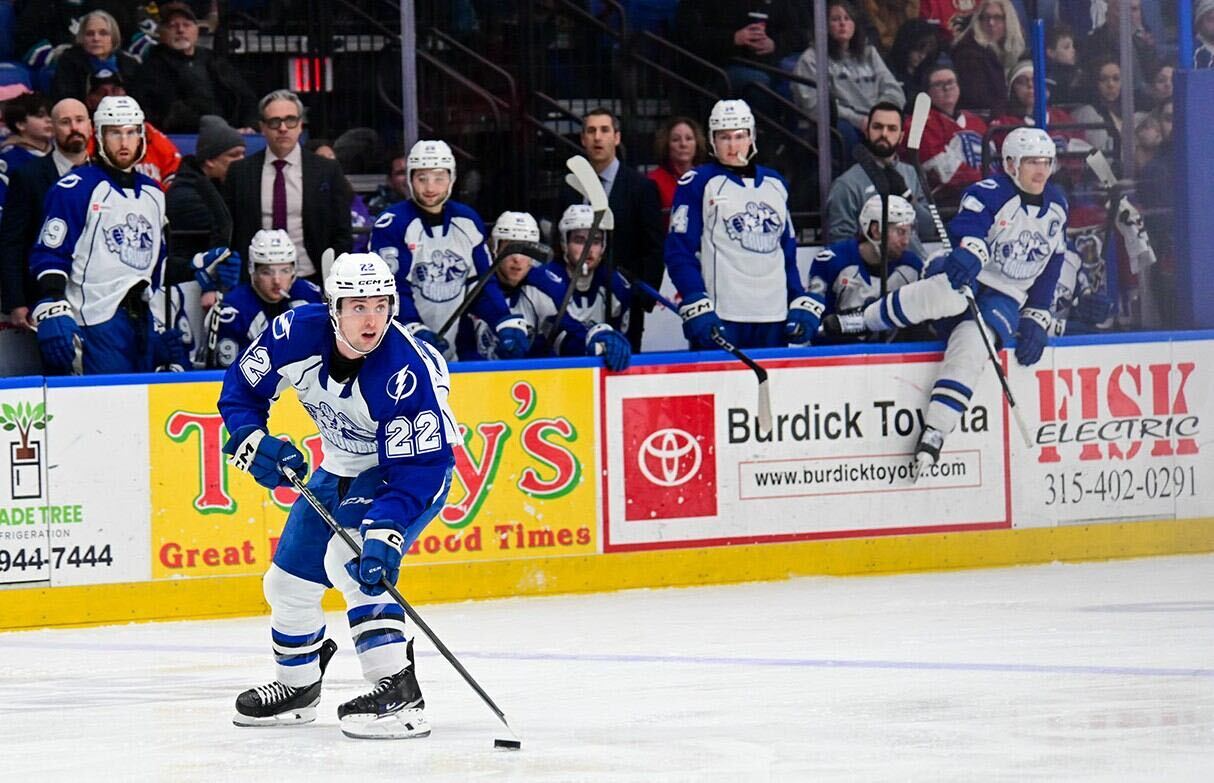
2. Stop Watching Only the Puck
If you want to learn how to improve hockey IQ, start paying attention to what happens away from the puck.
The puck naturally attracts your eyes, but much of the game is being decided somewhere else.
Watch how players without the puck create passing lanes. Watch how defenders adjust their gaps. Watch how forwards rotate when a teammate pressures. Watch how players move into space before the puck gets there.
This is especially useful when watching higher-level hockey.
Instead of following the puck for an entire shift, choose one player who plays your position and watch only that player.
Ask yourself:
- Where do they go when their team has possession?
- Where do they go when possession changes?
- How do they support the puck?
- When do they attack space?
- When do they stay above the puck?
- How do they react when a teammate gets pressured?
You will start seeing parts of the game that are easy to miss when you're only watching the puck.
3. Learn the Why Behind Hockey Systems
Memorizing where you're supposed to stand is not the same as understanding a system.
If your coach draws a breakout on the whiteboard and you only memorize the routes, you may know what to do when everything goes perfectly. The problem is that hockey rarely goes perfectly.
Pressure changes. Players get taken away. Pucks bounce. Opponents adjust.
That is why players need to understand why the system is structured a certain way.
If you're learning a breakout, don't just ask, "Where does the winger go?"
Ask:
- What pressure are we trying to beat?
- Why is the center supporting underneath?
- Where is our numerical advantage?
- What happens if the first option is covered?
- Where is our safety valve?
Once you understand the purpose behind a system, you're better prepared when the play doesn't happen exactly the way it was drawn.
That is a major part of hockey IQ.
4. Learn to Read Pressure
Good players don't just recognize that pressure is coming. They recognize where it is coming from and what that pressure takes away.
Pressure creates information.
If a forechecker approaches from one side, that player's angle may take away one option while leaving another available. If a defenseman steps aggressively in the neutral zone, there may be space behind them. If two defenders commit to the puck carrier, someone else may be open.
Instead of seeing pressure and immediately thinking, "I need to get rid of the puck," start asking:
What is this defender giving me?
Sometimes the answer is a passing lane. Sometimes it is space behind the defender. Sometimes it is an opportunity to protect the puck and wait for support.
Learning to read pressure turns defenders into information.
5. Think One Play Ahead
Hockey moves too quickly to make every decision after something happens.
You need to anticipate.
Try developing the habit of asking yourself:
"What happens next?"
If your defenseman is about to retrieve a puck, where is the forecheck likely coming from?
If your winger receives a breakout pass, where should you move to support them?
If your teammate takes a shot from the point, where might the rebound go?
If F1 forces the opposing defenseman up the wall, where is the next pass likely going?
You're not trying to predict the future perfectly. You're identifying the most likely possibilities so you can react faster when one of them happens.
The more situations you recognize, the less time you need to process them.

6. Understand Time and Space
Nearly every decision in hockey is influenced by two things: how much time you have and how much space you have.
When you have more time and space, you can hold the puck, attack, survey your options, or create something.
When time and space disappear, your decisions usually need to become faster and simpler.
Strong players constantly recognize this relationship.
Before receiving the puck, ask yourself:
- How close is the nearest defender?
- Which direction is that defender moving?
- Do I have space behind me?
- Can I attack the middle?
- Do I need to move the puck immediately?
Sometimes the smartest play is attacking open ice. Other times, it is making a quick five-foot pass and moving to support the next play.
Hockey IQ isn't about always making the spectacular play. It is about recognizing what the situation allows.
7. Get Better at Playing Without the Puck
You spend far more of a hockey game without the puck than with it.
That means improving your hockey IQ requires understanding what to do when someone else has possession.
Good off-puck players create options.
They get open. They support underneath pressure. They stretch defenders when appropriate. They drive dangerous areas. They maintain defensive structure. They anticipate where possession might go next.
Instead of asking, "Why don't I have the puck?" ask:
"What can I do right now to help the next play?"
Sometimes that means becoming a passing option. Sometimes it means pulling a defender away. Sometimes it means staying above the puck so your team isn't vulnerable if possession changes.
Players with strong hockey IQ remain involved in the play even when the puck is nowhere near their stick.
8. Learn From Your Mistakes Instead of Just Reacting to Them
Every player makes bad reads.
The difference is what happens afterward.
If you turn the puck over, don't stop at, "I should have passed it."
Go one step deeper.
Why did the turnover happen?
- Did you fail to scan before receiving the puck?
- Did you misread pressure?
- Did you hold the puck too long?
- Was there a better option underneath?
- Did you skate into pressure instead of away from it?
That distinction matters because fixing the decision-making process is more valuable than simply remembering one mistake.
If possible, watch video of your shifts. Pause before important decisions and ask yourself what information was available at that moment.
Then ask the most useful question:
"What did I see, and what did I miss?"
9. Study Situations, Not Just Highlights
Highlights are entertaining, but they don't always teach you why a play developed.
If your goal is to improve hockey IQ, study situations.
Watch breakouts. Forechecks. Rushes. Defensive-zone coverage. Neutral-zone regroups. Power plays. Penalty kills. Offensive-zone possessions.
Pause the video before the play develops and make a decision yourself.
Ask:
"What would I do here?"
Then let the video continue.
Even if the player chooses something different, compare the decisions. What did they recognize? What option did you miss? Was their choice based on pressure, support, positioning, or available space?
This turns watching hockey from entertainment into decision-making practice.
10. Train Your Hockey IQ Like a Skill
You wouldn't expect your shot to improve if you never practiced shooting.
Decision-making works the same way.
Players should deliberately practice recognizing situations and making reads.
That can happen through small-area games, video breakdowns, situational drills, system education, whiteboard work, quizzes, or hockey IQ training scenarios.
The key is being intentional.
Don't simply ask whether you made the correct play. Ask why the play was correct.
Over time, situations that once required conscious thought begin to become recognizable patterns.
And when you recognize the situation faster, you can make the next decision faster.
How Can You Practice Hockey IQ Off the Ice?
You don't need to be on the ice to work on your hockey IQ.
Some of the most valuable learning can happen away from the rink because you have time to slow situations down and understand them.
You can:
- Watch shifts from players at your position.
- Pause game film and predict the next play.
- Study common hockey systems and understand why they work.
- Review your own game film.
- Learn hockey terminology so you understand coaching language faster.
- Use decision-making scenarios to practice reads and recognition.
- Draw situations on a whiteboard and talk through different options.
The goal is to build a larger library of situations in your head.
Then, when those situations appear during a game, they aren't completely new.
How Long Does It Take to Improve Hockey IQ?
There isn't one timeline.
Hockey IQ develops through experience, coaching, film study, intentional practice, and exposure to different situations.
But players can start improving their habits immediately.
A player who begins scanning before every puck touch can become more aware without gaining an ounce of speed or strength. A player who starts watching teammates and defenders away from the puck can begin recognizing patterns they previously missed.
Don't try to master everything at once.
Pick one area and focus on it.
For example, spend a week concentrating on scanning before receiving the puck. Then focus on identifying pressure. Then work on off-puck support.
Small improvements in how you process the game can eventually create major improvements in how you play it.
Frequently Asked Questions About Hockey IQ
Can hockey IQ be taught?
Yes. Experience matters, but players can improve hockey IQ by learning systems, studying game situations, developing scanning habits, reviewing video, understanding positioning, and practicing decision-making. The goal is to help players recognize situations earlier and understand the reasons behind their decisions.
What makes a player have high hockey IQ?
Players with strong hockey IQ tend to collect information early, recognize patterns, anticipate pressure, understand time and space, support teammates, and adjust when a play changes. They aren't simply memorizing where to go; they understand what the situation is asking them to do.
How do you improve hockey IQ at home?
Watch game film with a purpose. Follow one player instead of the puck, pause before decisions, predict what will happen next, study systems, review terminology, and work through hockey decision-making situations. Hockey IQ can be trained away from the rink because many of its core skills involve recognition and understanding.
Does watching hockey improve hockey IQ?
It can, but simply watching games isn't enough. Watch intentionally. Focus on players away from the puck, pause before plays develop, predict decisions, and study players who play your position. Active film study is much more useful than passively following the puck.
Is hockey IQ more important than skill?
They work together. Technical skill gives a player more options, while hockey IQ helps the player recognize when and how to use those options. Developing both gives players a better chance to make effective plays as the game becomes faster and more competitive.
Hockey IQ Starts With Understanding the Game
If you want to know how to improve hockey IQ, don't look for one drill or shortcut.
Start learning to see more.
Scan before the puck arrives. Watch what happens away from the puck. Understand why your team's systems work. Read pressure. Anticipate the next play. Learn from mistakes. Study situations instead of just highlights.
Most importantly, become curious about the game.
When a coach tells you to be somewhere, ask yourself why that position matters. When a play works, understand what created it. When a play breaks down, look beyond the result and figure out what information was missed.
That's how the game starts to slow down.
At Overload Hockey, we're building tools to help players and coaches understand the game at a deeper level through hockey systems, decision-making training, drills, terminology, and interactive learning.
Skill gets you the puck. IQ tells you what to do with it.
Start learning with Overload Hockey and begin training the way you see the game.